


Matt Lange on "Recovery" and Why He Likes to 'Abuse' Plug-Ins.

Matt Lange is one of the most accomplished producers working in electronic music today. He’s a Mau5trap and Anjunabeats artist, a Berklee-trained composer, and someone who's spent the last decade building a sound around modular synthesis that's entirely his own. But around here, he's also been one of our first calls whenever we're testing a new plug-in or a new algorithm. His advice has always been generous and insightful, and it's made our plugins better each and every time.
He recently released a new solo album called Recovery, and he generously agreed to tell us a bit about the record, his workflow, and production techniques. Thank you Matt for the following interview:
Recovery is a provocative name for a record, and it's stacked with covers. How did you land on the title, and how did you decide which songs to reinterpret?
It has a multitiered meaning ultimately. First of all, I'm unfortunately (for everyone else... not me), drawn to puns and 'dad jokes,' and as the record has a significant amount of cover songs on it, I had to reference that. However, there was a lot of hardship that inspired the inception of this record, both emotionally and physically. The title truly couldn't have been anything else but Recovery.
As for the covers, “Another Space Song” and “Alkaline” were the first ones I did, and at the time I wasn't thinking about Recovery as an album yet. I was planning on doing a different new album that would be mostly vocal, and I used those covers essentially as vocal practice.
“How Much More Will You”, the first of the originals, was written right after those, but somewhere along the process I became hooked on the process of reinterpreting songs by others. Ultimately I chose songs I loved without thinking of any other common thread at the time. It was only halfway through Recovery, or later that a theme, even with the covers, revealed itself.
Like a lot of your stuff this record is dark, but a lot of the sounds and passages are very beautiful and uplifting. How did you achieve this?
Dry sounds! The contrast of dry against wet is such a wonderful psychoacoustic trick. "Fade Into You” in particular has these crackles from a modular synth that are super dry and right in your ears. They get ducked by a massive kick every few bars, and the dry swelling of them is really effective. Meanwhile the guitars and vocals are very washed out, so the contrast makes it feel like they're directly stuck inside your ears.
How did you make the kicks on this record? They sound like a giant monster stomping its foot!
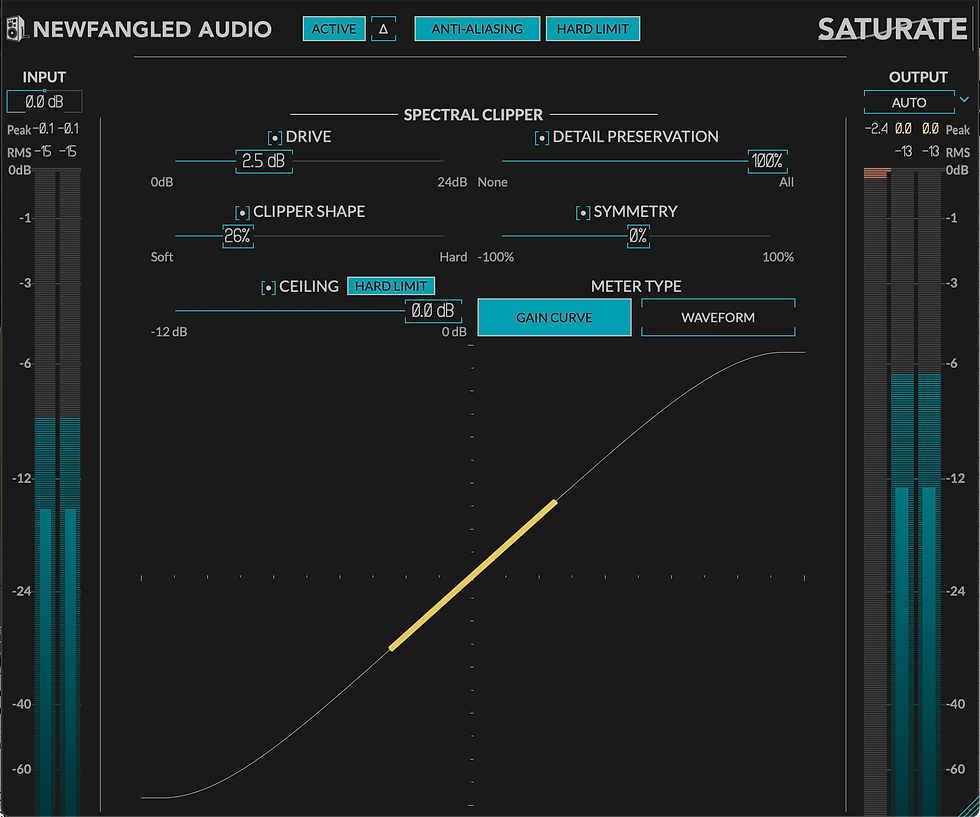
There are three main sources for kicks on Recovery: A modular synth, then the Elektron Syntakt and Machinedrum. My modular synth has been my main kick maker for the last decade, and it goes through a pretty hardcore chain: A Heritage 73jr pre, SSL Ultraviolet EQ, Distressor or Audioscape 76a, before it even makes it into the computer. Once in the box, they're processed further with EQ, multiband compression, and finalized with a copious amount of saturation and clipping from either Saturate or Elevate. Then they're printed and saved into a rather massive folder of kicks I've made over the years. The 808s on this record were primarily from the Syntakt with a fair amount of saturated filtering on top. On some songs acoustic kick samples were layered on top of the synthetic kicks, but the weight of them is purely synthetic.
This feels like a more vulnerable record than your previous: Isolated. What was the difference between your process on these records?
The biggest difference in process is really the vocals. While on a production level there's a lot of similarity; lots of actual recording, sound design, a hybrid of traditional instruments and electronic production. Isolated was primarily an instrumental record, with two exceptions. As I mentioned previously, I knew this record was going to be primarily vocal, so that ultimately changed the entire context, as the majority of the music was produced in support of a vocal topline as opposed to needing to solely stand on its own. That being said, instrumentally it's quite fun, and I'm considering releasing an instrumental version of the record.
The acoustic guitar on Real Big Sky sounds crazy! How’d you record/process that?
The acoustic on "Real Big Sky" was a bit unconventional, you could say. It's a baritone acoustic guitar tuned down to AEADEA, and I recorded both a mic'd signal at the 14th fret with a Neumann KM184, through a 73jr, Ultraviolet EQ, then a Distressor, and the piezo pickup signal simultaneously. The takes were double tracked. The piezo got sent through a slightly crunchy guitar amp sim and then blended in with the mic'd signal. In Emma Ruth Rundle's original version of the song, her acoustic is going through an amp, and I wanted to include a similar vibe, as the rest of my cover is a vast diversion from the original.
I know you write, record, mix, and master yourself. Do you approach these as separate processes, or do you mix as you compose?
It's all a giant blend, quite honestly. I'm always mixing at least a little bit as I write, and as sound design is often such an integral part of my creative process, I'm always mixing, processing, and resampling. That all being said, after the songs are done being produced I always have a separate mix day or two to get the mixes right, which can be quite tedious, as much of my work tends to be extremely layered and dense. Minimalism is a trait that I tragically do not possess.
Mastering for me is a completely isolated process, once all the various mixes are finished, then they're all mastered together. In the case of Recovery, where the whole album is a seamless blend of songs, the mastering was integral to the proper flow of the record. Elevate is the final mastering limiter across Recovery.
The whole record is layered with chattering growly sounds. What was the intent here? Did they all come from the same source, or were you drawing on a lot of different techniques to build these sounds?
I wish I could say there was a theme behind the chattery, growly sounds beyond the fact that I just really like chattery growly shit! I love Reese-style basses, and they're always part of my aesthetic, for better or worse. I also really love granular synthesis. It's my favorite ‘synthesis’, if you will, which certainly has an aptitude for sputtery and chattery sounds. And then, of course, there's distortion. Maybe it's the metal that's inherently bonded to my musical soul, but I use a lot of distortion in general, be it plugins, guitar pedals, or guitar amps. It all gets carved out quite surgically in the end, but distortion is a heavy part of my sonic aesthetic, even though it might not always seem like it. Also, 8-string and baritone guitars don't hurt either.
We're noticing a lot of breakbeats on this album, but they're treated more as an accent or textural element. I liked this and wondered if there was a meaning behind it, or if you wanted to share anything about that.
The meaning is that I like drum and bass! I'd never really used an Amen break before in my own work, and for fun, one afternoon I took the Amen and slammed it through some outboard to get a very hot and distorted version of it. The Audioscape V-Comp, which is a vari-mu compressor, is responsible for the saturation after being driven way too hard. This then became an element I could use throughout the record, as an accent or a fill, the one exception being at the end of "Alkaline”, where it's displayed in its full distorted beauty.
You composed and mixed this directly for Atmos first. So, what was that process like? What were the challenges? How did you find cramming it back down into two channels?
It was actually the other way around. I knew that the record would ultimately end up in Atmos, but everything was written and mixed first in stereo. The biggest challenge with Atmos was the fact that this was a seamless record, and every Atmos mix had different object assignments, which didn't line up with the object assignments of the tracks around them. To get the entire record to seamlessly blend in Atmos ended up requiring some technical sacrifices — after doing all the individual Atmos mixes, I had to go back and send a lot more elements to the 7.1.4 bed than I originally intended, for that reason. Dolby is aware of my demands, you could say hahaha!
Any production techniques you used that you're particularly proud of here? Or any stories you'd like to tell about the production?
For me, it comes back to it being a vocal record. I've sung on so much of my own work over the years, but I've never done a truly vocal album. From a vocal production standpoint, I also recorded every vocal sitting down as opposed to standing up. It changes the timbre of your voice and tends to sound a little softer and more intimate. This was a direct choice.
Other than that, it's the same kind of workflow I've been developing over the years: take a microphone, guitar, or synth, run it through a bunch of guitar pedals, chop up the noise, and play as many instruments as possible. With the exception of programming drums as audio on the grid, and the occasional necessity of orchestral libraries, I play everything. I love buying and trying to learn new instruments. So much of my work has been inspired by trying to learn an unfamiliar instrument. Much of Isolated, in fact, was inspired by an Erhu I acquired.
You've been such a helpful contributor to the development of our plug-ins over the years. How have those plug-ins been finding their way into your workflow recently?
Elevate has been my mastering limiter ever since you first started developing it, so every track I've worked on in the last decade has been mastered with Elevate. Saturate is used regularly, and I suppose even more than Elevate, as it'll be across any number of channels in a session, whether I'm using it as a clipper or a saturator. Recirculate and Articulate were used throughout Recovery as well. The main vocal delay in "And All That Could Have Been" is Recirculate. Generate was used all over the Isolated album, too.
Because of your in-depth knowledge of our plug-ins, is there anything you wish people knew about them that they might not? Anything you wish I knew about them?
They like to be abused! Newfangled plugins are always extremely powerful, and while of course they're capable of subtlety, I personally like pushing them pretty hard. It's pretty incredible to me how good they continue to sound when pushed to levels that would make other plugins break.

They marry creative inspiration with technical power in a way that's both powerful and inspiring. They're always quite deep too, having all of the individual parameters and features available to be manipulated allows for sounds I simply can't get anywhere else. Recirculate is a prime example of this, and one of my most-used delays, because it's simply capable of sounds that other delays are not. Quite frankly, they're indispensable to my workflow from both a creative and a technical perspective.
Stream Recovery here, and if you want to hear what pushing our plugins actually sounds like, grab a free demo of Elevate, Saturate, Recirculate, Articulate, or Generate for yourself.
Until next time,
Dan



Comments